Side-by-side comparison for construction teams
Physical Intelligence (π)
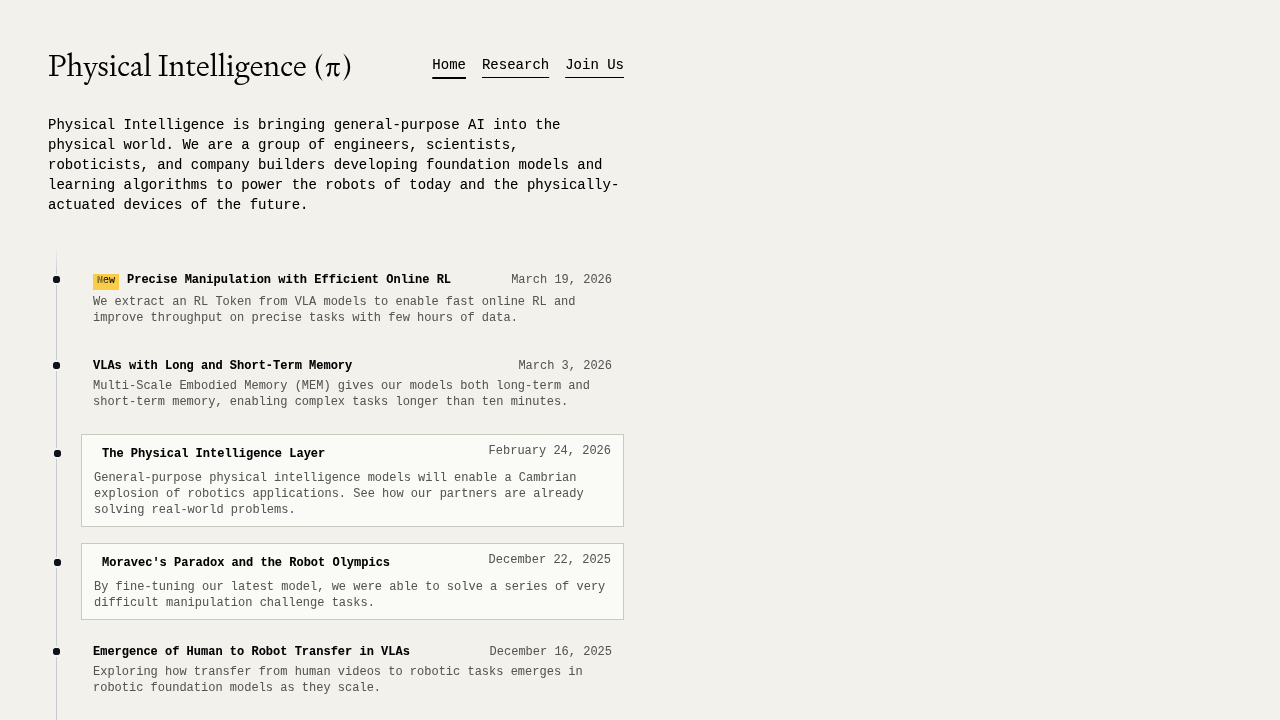
Physical Intelligence (π) is a company focused on bringing general-purpose artificial intelligence into the physical world. While the company's core mission centers on developing AI systems capable of interacting with and manipulating physical environments, its technology has potential implications across industries that rely on robotics, automation, and intelligent physical systems. The platform aims to bridge the gap between digital AI capabilities and real-world physical tasks, targeting a broad range of applications where autonomous physical interaction is required. At its core, Physical Intelligence is developing foundational AI models designed to enable robots and physical systems to perform a wide variety of tasks without being narrowly programmed for each one. This general-purpose approach differentiates the company from traditional robotics firms that build task-specific solutions. The technology leverages advances in machine learning, computer vision, and embodied AI to create systems that can adapt to new environments and challenges, potentially reducing the need for extensive reprogramming or manual intervention. In industries such as construction, general-purpose physical AI could improve workflows related to material handling, site inspection, repetitive assembly tasks, and hazardous environment navigation. The promise of adaptable robotic systems means that companies could deploy intelligent machines across multiple phases of a project rather than investing in single-purpose equipment. This flexibility could lead to time savings, improved safety by reducing human exposure to dangerous conditions, and greater operational efficiency on job sites of varying complexity. Physical Intelligence appears to be in the research and development stage of building its platform, with a focus on creating scalable AI models that can be deployed across diverse physical systems. Details regarding specific deployment models, integration capabilities, and implementation timelines are not yet publicly detailed, suggesting the company is still in early phases of commercialization. As the technology matures, it may offer cloud-based model training with on-device inference for real-time physical task execution. The company is positioned at the frontier of embodied AI research, an area attracting significant attention from both the technology and industrial sectors. While specific customers, case studies, or industry certifications are not yet publicly available, Physical Intelligence's ambitious mission to create general-purpose physical AI places it among a growing cohort of companies seeking to transform how intelligent systems operate in the real world.
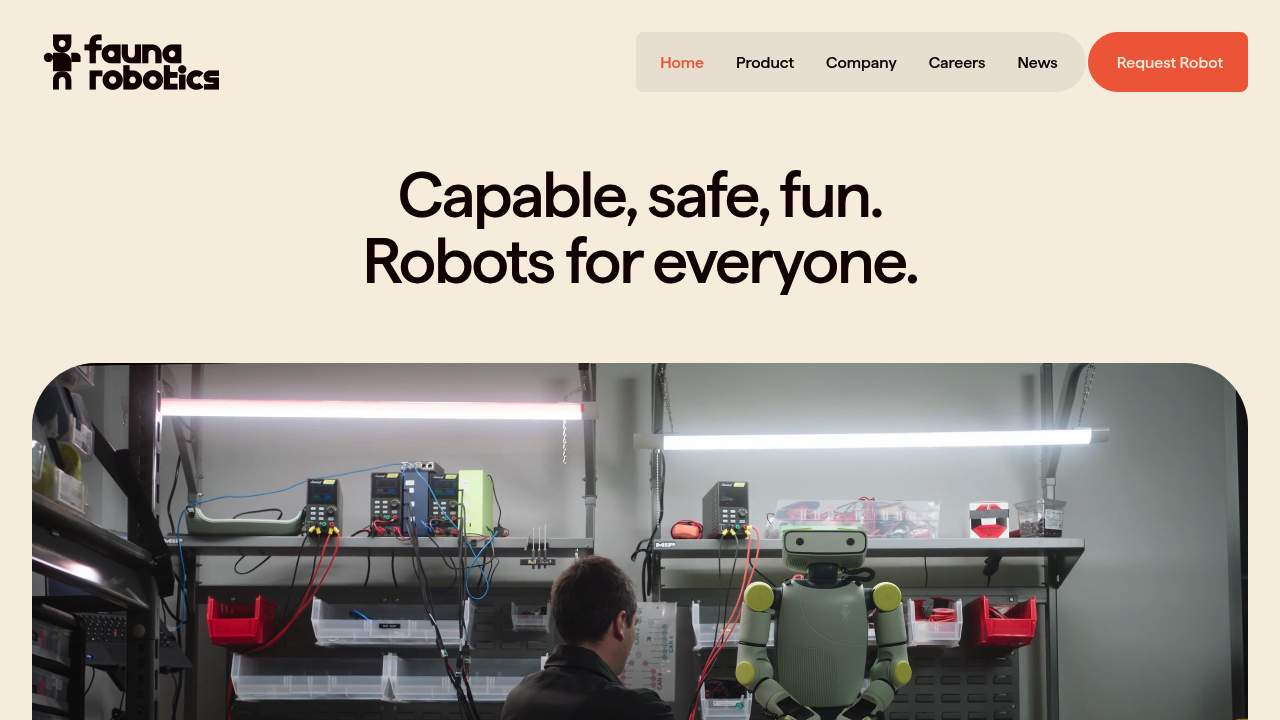
Capable, safe, fun. Robots for everyone.
Fauna Robotics develops Sprout, a humanoid robot platform designed to be capable, safe, and fun for a wide range of applications. While not exclusively focused on construction, Sprout represents an emerging category of robotics technology that has potential applications across industries including retail, hospitality, entertainment, research, and built environment settings. The platform is targeted at developers, enterprises, and researchers who want to build, test, and deploy robotic applications in human-occupied environments. Sprout's core features include modular autonomy, compliant and capable locomotion, whole-body teleoperation, and a full SDK for developers. The platform is distinguished by its safety-first design philosophy, incorporating lightweight materials, a soft exterior, minimized pinch points, onboard safety sensing, and compliant motor control that yields to external forces. These design choices make it suitable for deployment in environments where robots must interact safely alongside people, a critical consideration for any built environment application. The robot platform supports multiple use cases across various industries. In retail and hospitality, Sprout can welcome guests, showcase products, and guide visitors through spaces with custom voices and gestures. For research and education, it serves as a platform for collecting real-world data and advancing AI research across locomotion, manipulation, and interactive behaviors. In entertainment and experience settings, it can bring interactive characters to life in parks, attractions, and live experiences. The consumer and home segment positions Sprout as a personal assistant or companion. Sprout is designed in New York City and assembled in America. The platform ships with battery, grippers, and software included, providing a ready-to-use solution for developers and enterprises. With full SDK access, the platform enables custom application development and integration into existing workflows. The robot is currently shipping, making it available for immediate deployment and experimentation. Fauna Robotics positions itself as building toward a world where robots operate everywhere people do. The company has indicated trust from notable organizations, with Disney's logo appearing among its trusted partners. This suggests the platform has gained traction in high-profile entertainment and experience-driven environments, validating its capabilities for human-facing robotic interactions at scale.
| Attribute | Physical Intelligence (π) | Fauna Robotics |
|---|---|---|
| Category | Safety | Safety |
| Parent Company | — | — |
| Tagline | Physical Intelligence (π) | Capable, safe, fun. Robots for everyone. |
| Sub-categories | Field Management | Field Management |







Our directory has 10+ tools in this category. Browse them all or submit your own.